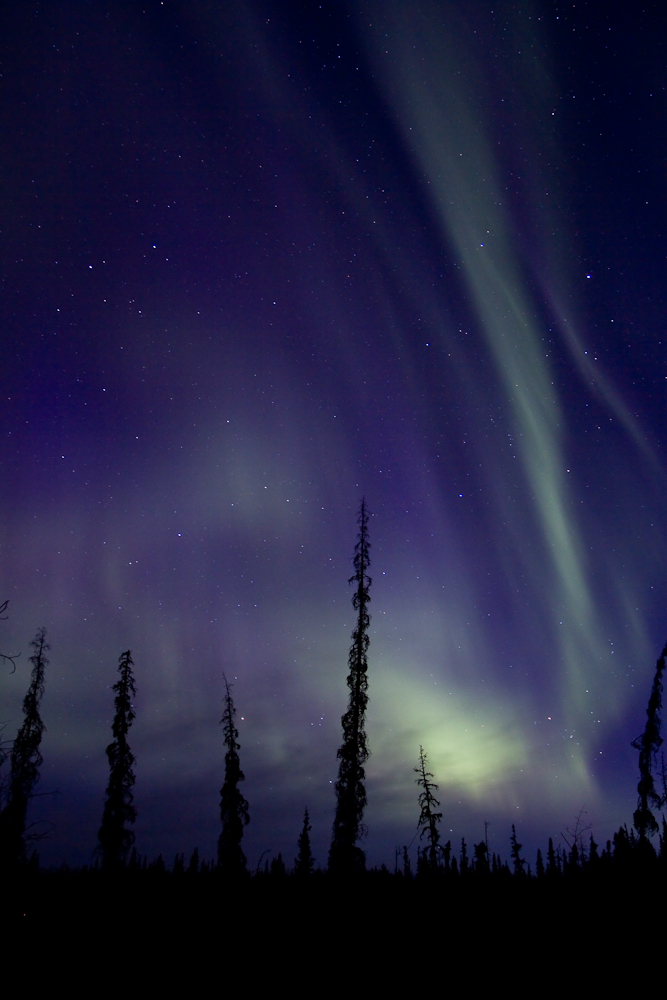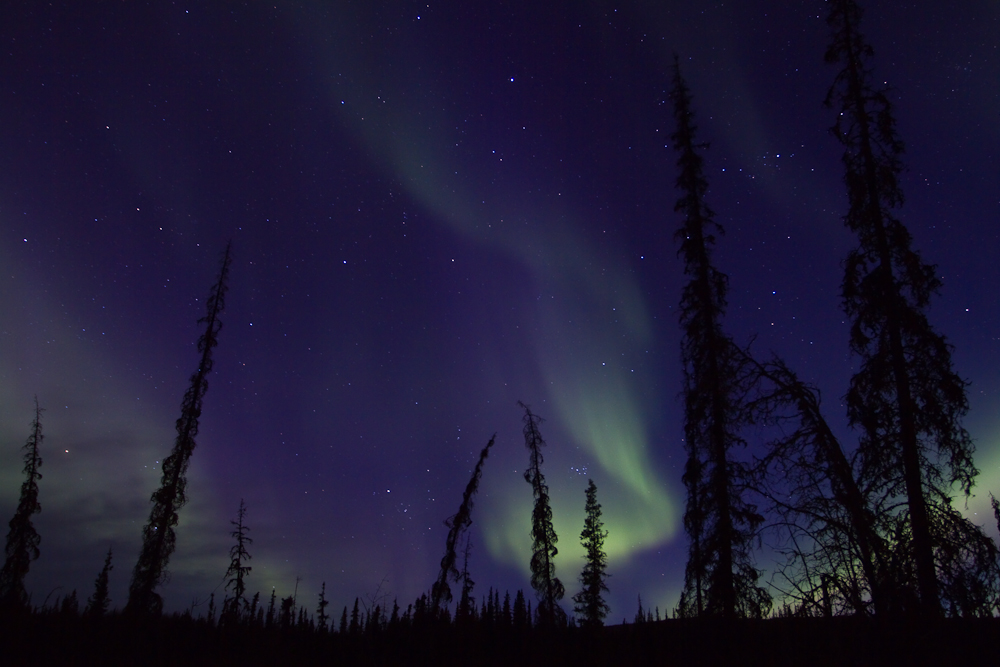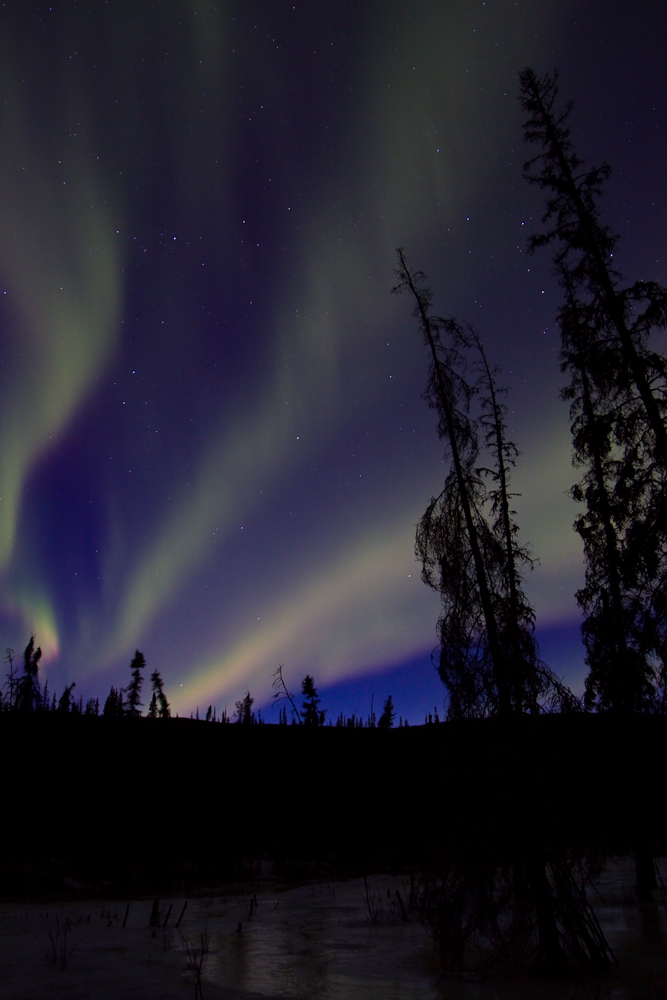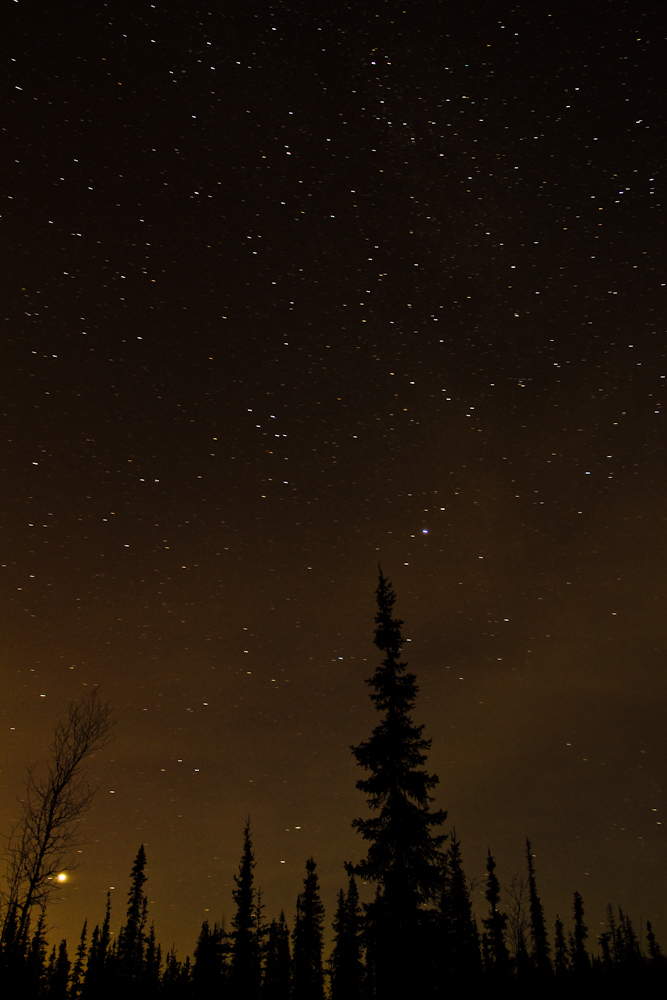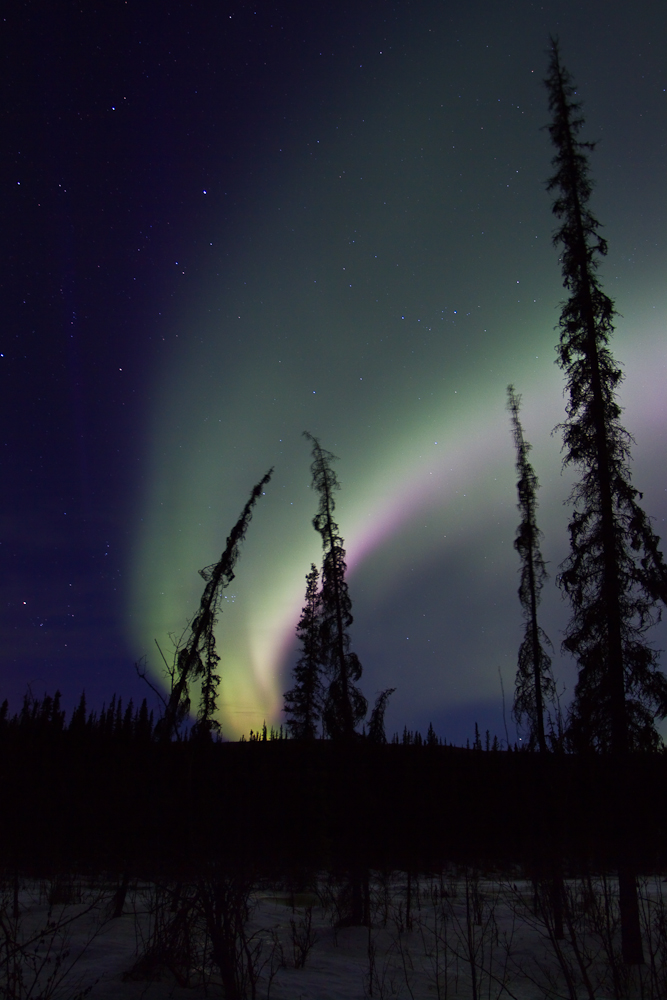
My recent posts of aurora images have drawn a record number of visits to this blog, and several people have queried me with questions in the comments, emails, facebook, or twitter. So I thought I would pass on a few tips to make your own efforts with night photography a bit easier.
1. Get a Tripod. I know this sounds self explanatory, but I'm constantly amazed at how many photographers don't own one, or if they do, don't use it. Tripods are, in my opinion, the one tool in a photographers kit that will greatly improve his or her images. Using a tripod forces you to slow down, think, compose carefully. You can't just point and shoot when using a tripod, you have to move slowly because everything simply takes more time. Of course, you also get sharper images. But I digress- You NEED a tripod for night work because the exposures are so long that it is absolutely impossible to do handheld work. So if you don't have one, get one. A cheapie from your local disount store will work, but I suggest you invest some money in a good set of legs and a good head, it will save you hours of frustration and buyer's remorse.
2. Determining Exposure. It is likely in night work that your camera will get very confused and unable to choose the appropriate f-stop or shutter speed. So you'll need to use the camera's manual setting. (For those who use auto-everything this is a good opportunity to throw away the crutches and learn something about exposure.) Next select an ISO that is appropriate to your camera. If you have a top of the line camera in Nikon or Canon's line with very low noise you'll be able to use a fairly high ISO setting, like 800 or even higher. If however, you shoot with a lower grade DSLR, you'll need to start lower. Try 200 or 400. Next, select a shutter speed. This will depend on your ISO and how fast your lens is. I suggest starting off around 15 seconds, then review your image on the LCD and adjust up or down as necessary. (A word of warning: on a dark night when the only light is your camera LCD your image will appear brighter than it will on your computer, so be careful.)
3. Sharpness. When I first began making images at night, this was my Achilles heel, as I think it is for most people starting out in this genre of photography. Focusing at night is tricky. Even the best cameras won't be able to focus in the dark so set your lens on manual focus and set it like this:

The left edge of the infinity line is the best place to start, small adjustments can then be made by reviewing the LCD after the first few images. You'll likely find if your foreground elements are placed sufficiently back in the frame that everything will be sharp, from the trees and hills to the stars and aurora.
4. Lens Choice. Go wide. Go fast. A good, wide-angle zoom allows you to show as much of the sky and foreground as you wish. The zoom will allow some latitude in your composition. A fast lens like an f2.8 or better will permit shorter shutter speeds which means less trailing in the stars, less wind-motion in the trees and better definition of the curves and pillars of the aurora. Slower lenses will work but higher ISOs (and thus more noise) might be necessary or longer exposures (leading to unwanted trailing in the stars or blurring of the aurora).
5. Composition. Compose as though you were composing a landscape image. Your subject is the sky, but the other elements in the frame are just as important as they would be in daylight. An image of just the aurora and a few stars might have some interesting color but lacks of sense of place or depth. A poorly composed foreground will be a distraction. Select a tree, mountain, person, tent, or whatever and compose carefully. Don't get caught up with just the sky, in the end the other elements of the image are just as important.
Anyone else have thoughts, tips or additional questions on night photography? If so, leave them in the comments.
Anyone else have thoughts, tips or additional questions on night photography? If so, leave them in the comments.