Showing posts with label gear. Show all posts

Wednesday, December 2, 2009

Gadgetry

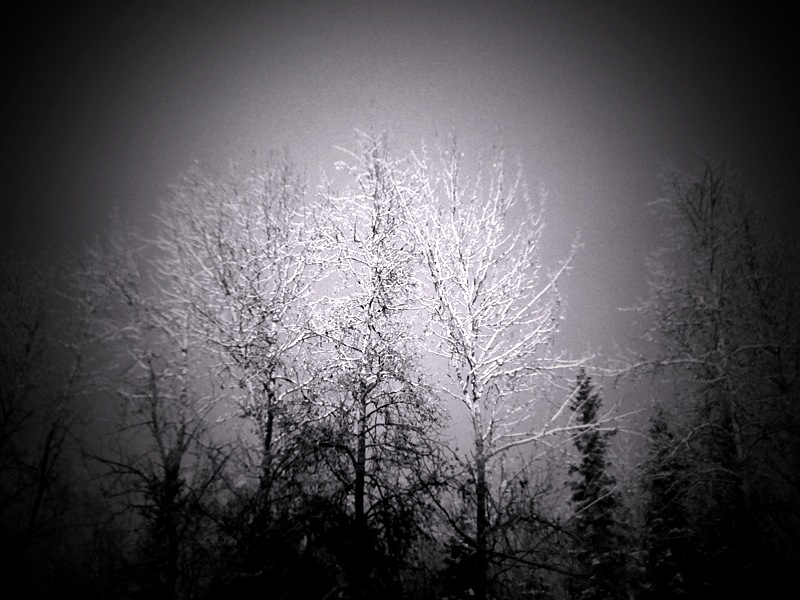
IPhone-Winter Trees
iPhone image, post processed in Best Camera iphone application

OK I admit it, I'm a total sucker for gadgetry. And in that vein, I just got an iphone. I'd admired the little do-it-all wonder for some time, but the price had kept me from jumping on the band wagon. Recently, however, my other plan expired and I decided it was worth the extra bit for the shear niftiness of the iphone. Among that niftiness is the iphone's camera. At a mere 2 megapixels in the version I have, it is unlikely to ever produce to a truly publishable image, but that is not its purpose. Rather, I look at it as I would a Holga. A tool for creativity rather than reproduction. And it is great for that, always with me it allows me to snap some shots I would not have otherwise bothered with. Add to it, the neat application: Best Photo, developed by Chase Jarvis and you have hours and hours of entertainment. The image above is post-processed in Best Photo, which has some neat effects for a very simple program.

Anything to keep my creativity going, right? Or is it anything for a new spiffy gadget?

Friday, October 30, 2009

Wilderness Photography

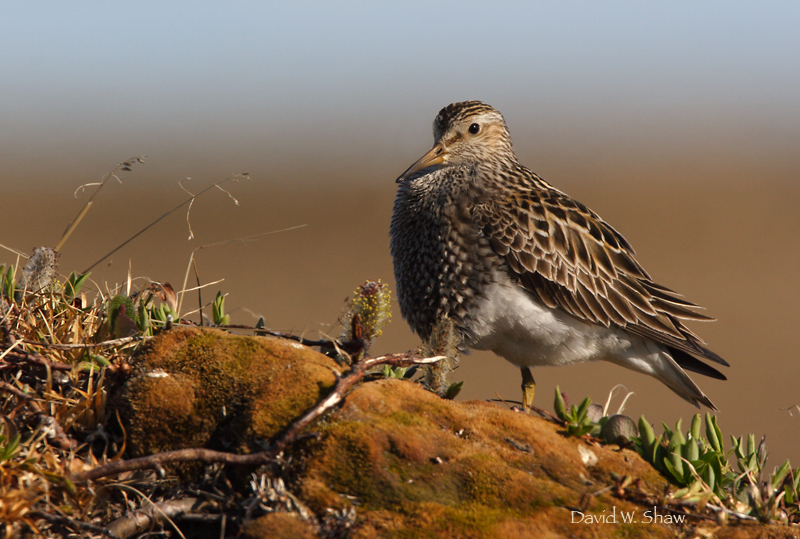
Male Pectoral Sandpiper
Canon 20D, 500mm f4L w/ 1.4tc, 1/800th sec @ f10, ISO 200

I made the image above on a photography trip I was leading for the excellent wilderness outfitter Arctic Wild in 2007. It was a custom trip, which basically means that the two clients wanted to have a trip designed to their needs. I was fortunate enough to be their guide. In mid-June I met my two clients in the remote village of Kaktovik on the coastal plain of the Arctic National Wildlife Refuge. From there we flew out to a wilderness airstrip on the Canning River for a few days of shooting, then moved north to the mouth of the Canning for the final days of the trip. Bird photography was the goal of the trip, and I did my best to put the two clients in the best situations I could muster. I think I was fairly successful. But shooting in these areas is not easy. There are a lot of considerations from memory cards to charging batteries, to packing light for small-plane travel. I regularly get questions about what I carry on a wilderness photography trip, and here is my answer:

I take what I need. There now we can all go home.

Of course it isn't that straightforward. Needs and wants are often confounded so its important to understand priorities. First and foremost, I carry what I need to stay warm, dry, and well-fed. It is impossible to take good photographs, if my hands are too cold to hold the camera because I decided to leave behind my mittens in exchange for an extra lens. I won't go into the details of my personal packing list, because it varies so much from trip to trip. From there I can start thinking about camera gear.

On most flights into the bush, passengers are limited to 50-60lbs of personal gear. On backpacking trips that amount will also include your share of the food and group equipment. So packing light is key. I can generally get all my non-photographic equipment including tent, clothing, sleeping bag, pad and such down to 25-30lbs. That leaves 25-35 lbs remaining for camera gear. Here is my photo equipment list for a non-backpacking, photography specific trip:

2 camera bodies (a backup is vital)
500mm f4
1.4x TC
17-40 f4
70-200 f2.8
30mm f1.4 (this one is optional, and can be left behind if things are tight)
Carbon fiber tripod
Memory card wallet with about 25 gigs of memory
Camera backpack
2-3 extra batteries
Solar panel and battery charger
2 stand-alone battery powered hard drive/card readers
Small bag of filters, remote triggers and other accessories

Total camera gear weight: about 30lbs.

Backing up images is vital. A good friend and fellow Alaska photographer, Hugh Rose, recently lost his compact flash card wallet overboard in Prince William Sound. I'm not sure he had his images backed up or not, but the lesson is clear: cards are replaceable, but your images aren't, so backup. Several companies make external, stand-alone, battery-powered hard drives that can be used to back up your images no matter where you are. Jobo, Sanho, Nexto, and Epson are four. I carry two in separate waterproof cases so everything is in duplicate.

Battery charging- With some luck, your time in the backcountry will include a few sunny days and the sun is an excellent source of electricity if you've got the right tools. Brunton manufactures several varieties of compact and foldable solar panels. With the right attachments and chargers, you have all you need to keep shooting. I won't go into the technical details here, but check out their website for some ideas. You can purchase chargers made to work with a variety of camera batteries (using adjustable contact points on the charger) which are compatible with solar panels. A visit to your local battery supply store will get you going in the right direction.

So the summary is this: extended photo trips to the world's wild places can be full of hurdles. But none of them are insurmountable. If you have more questions about this, or anything else, leave them in the comments and I'll do my best to answer them.
Friday, October 23, 2009

Canon 7D- thoughts

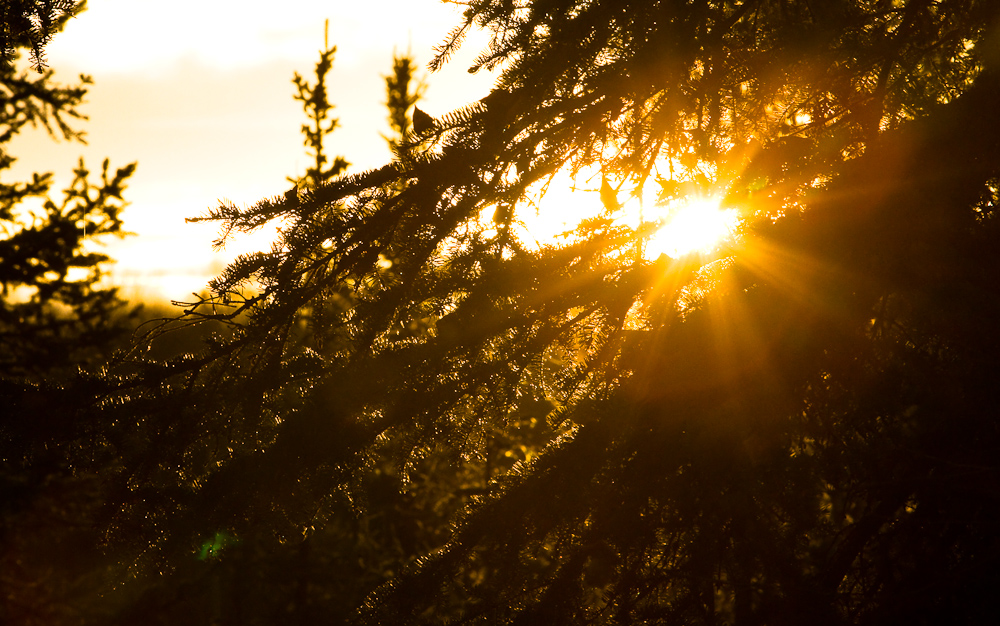
Spruce Sunset

So a week or so ago, I promised you all some more detailed thoughts on Canon's new 7D. This is in no way a detailed technical review, there are more than enough sources on the internet to find that information if you want it. Rather, I'm going to give you some of my thoughts on the camera, how I think it handles, what I like and what I don't. Here it comes, beware the faint of heart:

1. First of all I like the look of the camera. From the XXD line it upgrades a bit on the design end. The sharp lines where the pop-up flash rises in the XXD series is smoothed in the 7D, emulating to some degree, the contours of Canon's professional grade cameras. It is perhaps a touch heavier than my 40D without the battery grip. I also very much like that Canon dispensed with the silly pre-set options on the dial (landscape, portrait, close-up etc.) I never used those, and nor should any serious photographer. It is nice to see them gone. I wish it came equipped with a vertical grip such as the 1D and 1Ds series but that, I realize, is asking too much in a mid-line camera. There are also substantial upgrades to the body material, full magnesium alloy which should make it substantially more durable than the XXD line and more equivalent to the 5D.

2. I LOVE the resolution on the screen. It is far and away better than the 40D. Great colors, and sharpness with enough detail to get a solid idea of the noise in an image. An excellent upgrade.

3. I even more love the fact that this camera can shoot full HD video. This opens up a world of possibilities for new creative endeavors, expanding my work into the realm of multi-media. I'm no expert in this regard so can't say how it compares to other cameras, but it is hard to imagine a better image, the files are huge, sharp and detailed. One nit is that I can't seem to get the camera to autofocus while shooting video, I may just not have the settings right, but this is something I need to explore more.

4. The autofocus is an improvement over the XXD line, but the user interface to select among the 18 sensors is a bit cumbersome. Again, maybe I just need to play with this, but so far, I'm only able to figure out how to select a focus point manually by clicking the select button then moving the multi-controller. On my 40D I only had to adjust the multi-controller which took less time. The autofocus does suffer from Canonitis. That being, it is a bit slow and unreliable in low-light conditions.

5. I love that the pop-up flash (otherwise useless) can be used as a commander for off-camera flash. With the click of a few menu selections I can separately control three groups of flashes. The camera seems to seamlessly communicate with both my old Canon 420EX and my new 580EX II. For general portrait and studio work, this saves the hassle and expense of dealing with Pocket Wizards.

6. Noise. This camera is 18+ megapixels in an APS-C sized sensor. That is PACKING them in there so I'm not surprised there is a bit of noise. Low ISOs (100-400 or even 800) are quite acceptable and require relatively little clean-up in Lightroom. However at 1600 and above it starts to get messy. I've gotten decent results at 1600 but that was starting to push it. With good noise reduction software on your side, or small reproduction sizes you might be able to go higher.

Well there you go. As you can see, in general, I like this camera a lot. It isn't perfect, the noise and auto-focus could be improved, but for the bucks, I think its the best camera on the market.